In Clayton County, Georgia, Judge Steven Teske saw a disturbing pattern: more and more students were being arrested in school for minor offenses like disrupting class or fighting. These arrests led to court appearances, probation, and in many cases, jail time. As a juvenile court judge, Teske realized the system was criminalizing normal teenage behavior—especially harming Black and Latino students and those with disabilities.
In 2003, Judge Teske decided to act.
He convened local police, school officials, and community leaders to form what would become a model juvenile diversion program. They agreed on a new approach: schools would stop referring students to court for minor infractions and instead offer in-school interventions like counseling, peer mediation, and family support.
The Results Were Remarkable:
School arrests dropped by more than 80%.
Graduation rates improved.
The juvenile court system could now focus on youth with serious needs—offering rehabilitation instead of punishment.
What makes Judge Teske’s story so powerful is that he didn’t just enforce the law—he changed the system. He looked beyond punishment and believed in restorative justice,healing, and the idea that every young person deserves a second chance.Philosophical Lesson:
“Justice without compassion is blind. But justice with empathy builds bridges instead of walls.” — Inspired by Judge Teske’s actions
“The Button Collector”
In the quiet town of Pendlebrook, where nothing exciting ever seemed to happen, lived a man named Horace Thimble. Horace was in his late sixties, wore corduroy trousers year-round, and was known for one thing only—his obsession with collecting buttons. He had thousands of them, each labeled, categorized, and displayed in old tobacco tins stacked to the ceiling of his dusty little cottage.
The townsfolk found Horace odd but harmless. Children dared each other to knock on his door and run. Teenagers whispered that he talked to his buttons at night. Even the postman smirked when delivering yet another parcel of vintage fasteners.
But on one gray November morning, everything changed.
A storm rolled in—unnatural and sudden. It wasn’t just thunder and rain. It came with a deep, pulsing hum that rattled windowpanes and made people clutch their heads in pain. The sky split open above Pendlebrook, and from the chasm descended something the world had never seen: a tower made of black glass, humming with energy, landing right in the center of town square. From it poured creatures—silvery, faceless things that floated a few inches above the ground. They didn’t speak. They only scanned and recorded, their presence warping time and space, making clocks spin backward and dogs bark at their own reflections.
People fled. The army was called but couldn’t get near the town—the tower emitted a pulse that scrambled electronics and made compasses spin.
The town was on the verge of being written off.
And then Horace Thimble walked straight into the square with a rusty biscuit tin tucked under one arm.
You see, Horace wasn’t just collecting buttons out of hobby. For years, he’d been receiving strange messages through obscure collector’s forums and coded patterns sewn into vintage coats. He had long suspected something was coming. What no one knew was that his buttons weren’t just buttons. One of them—an ancient mother-of-pearl clasp from the 1600s—was a key.From it poured creatures—silvery, faceless things that floated a few inches above the ground. They didn’t speak. They only scanned and recorded, their presence warping time and space, making clocks spin backward and dogs bark at their own reflections.
People fled. The army was called but couldn’t get near the town—the tower emitted a pulse that scrambled electronics and made compasses spin.
The town was on the verge of being written off.
And then Horace Thimble walked straight into the square with a rusty biscuit tin tucked under one arm.
You see, Horace wasn’t just collecting buttons out of hobby. For years, he’d been receiving strange messages through obscure collector’s forums and coded patterns sewn into vintage coats. He had long suspected something was coming. What no one knew was that his buttons weren’t just buttons. One of them—an ancient mother-of-pearl clasp from the 1600s—was a key.
In the 1990s, a Jewish rabbi named Michael Weisser moved to Lincoln, Nebraska. Not long after settling in, he began receiving hateful, threatening messages and packages from a man named Larry Trapp, a local leader of the Ku Klux Klan.
Trapp was known for his racism, antisemitism, and white supremacist beliefs. From his wheelchair—he had lost both legs due to diabetes—he ran a hate hotline and harassed minorities.
But instead of responding with fear or hatred, Rabbi Weisser and his wife chose kindness.
They began leaving Larry messages of peace, love, and compassion. One day, the rabbi called and said, “Larry, I heard you’re disabled… I thought you might need a ride to the grocery store.”
At first, Larry was stunned. But over time, the rabbi’s compassion broke through his wall of hate.
Eventually, Larry Trapp did something unthinkable: he renounced the KKK, apologized publicly, and converted to Judaism. He said:
“I had all this hate, and nobody ever called me out with hate. They just showed me love.”
as family until he passed away.
🌟 Moral of the Story:
Kindness doesn’t always change people overnight—but it can melt even the hardest heart. Love is louder than hate.
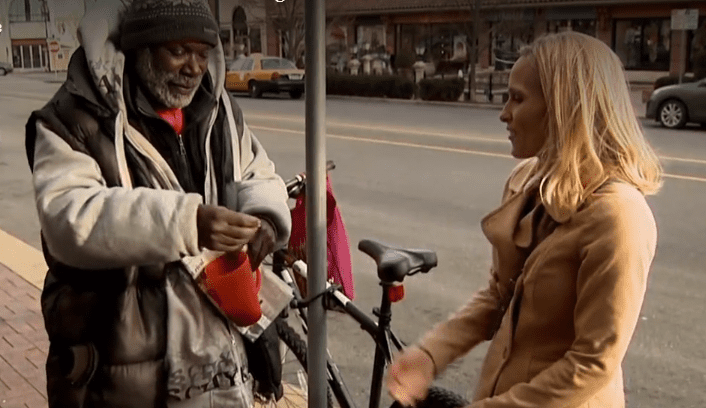
In 2013, a woman named Sarah Darling accidentally dropped her diamond engagement ring into a homeless man’s cup while giving him change on a street in Kansas City.
The man, Billy Ray Harris, didn’t realize it at first. But when he saw the ring, he could have sold it easily—worth several thousand dollars.
Instead, he waited at the same spot for days, hoping she’d return.
When Sarah did come back—heartbroken but hopeful—Billy handed it to her with a smile and said:
“I figured it was a mistake, and I just wanted to do the right thing.”
Grateful and deeply moved, Sarah and her fiancé started a GoFundMe page for Billy.
They raised over $190,000 in donations.
Billy used the money to buy a house, reconnect with family he hadn’t seen in years, and rebuild his life. He now volunteers and speaks to others about dignity, hope, and second chances
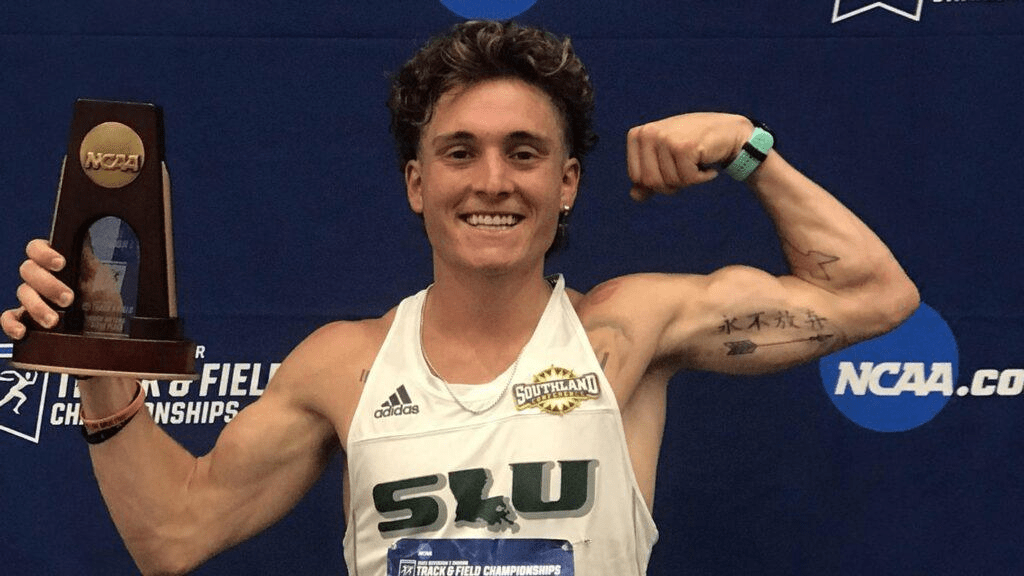
In June 2021, just before joining Oklahoma State University as a graduate transfer for their cross-country team, Shea Foster’s life took a dramatic turn. While driving his 2012 white Jeep in Louisiana, he was struck by an out-of-control 18-wheeler. The collision left him in a coma for 48 hours and temporarily paralyzed from the waist down for two weeks. He suffered a fractured spine, necessitating a 360-degree spinal fusion surgery, and required 50 staples on both sides of his body. Doctors warned that walking again would be a miracle, let alone running competitively .The Accident That Changed Everything
competitively .
Defying the Odds
Despite the grim prognosis, Shea was determined to reclaim his life. Within weeks of surgery, he began walking a mile, and two months later, he was running long distances. By November 2021, he was competing for Oklahoma State, earning All-American honors with a 27th-place finish at the NCAA Cross Country Nationals .Embracing the Paralympics
Initially hesitant about the Paralympics, Shea’s perspective shifted after a heartfelt conversation with his younger sister, who has spina bifida. She remarked, “We have matching scars now. We’re the same.” This moment inspired Shea to embrace the Paralympic path, not just for himself but to inspire others facing similar challenges .New York Post
He went on to set an American record in the T-38 men’s 1500-meter race, a category for athletes with coordination impairments, and became a favorite for Team USA in the 2024 Paris Paralympics .From Athlete to Advocate
Beyond athletics, Shea gained national attention by starring in Netflix’s reality series “Surviving Paradise.” The show, which challenges contestants to transition from the wilderness to a luxury villa for a $100,000 prize, showcased Shea’s resilience and adaptability, further amplifying his platform to inspire others .New York Post
💬 Words of Wisdom
Reflecting on his journey, Shea said, “Adversity is something that gives you the opportunity to overcome it.” His story serves as a powerful reminder that with determination and support, it’s possible to transform life’s challenges into triumphs.New York Post
Zion was born without legs due to a rare condition called caudal regression syndrome. He spent most of his childhood in the foster care system, facing rejection, bullying, and instability. But through all the adversity, he refused to give up.
At school, Zion discovered wrestling. Though he was smaller than everyone and lacked the physical advantages most athletes had, his work ethic and mindset turned him into a serious competitor. He trained harder than anyone else and studied his opponents relentlessly.
Zion eventually became one of the top high school wrestlers in his class. He went on to break a Guinness World Record as the fastest man on two hands and has since become a motivational speaker, author, and professional athlete.
🗣️ Zion says: “People will always try to put limits on what you can do. But if you work hard and believe in yourself, you can overcome almost anything.”
Wilma Rudolph was born prematurely in 1940, weighing only 4.5 pounds. By age 4, she contracted polio and was left with a twisted leg and foot. Doctors told her she would never walk again without braces. But Wilma was determined. Through years of physical therapy, sheer willpower, and her family’s support, she overcame the odds.
By age 12, she shed her leg brace and began running. Just eight years later, she became the first American woman to win three gold medals in track and field at a single Olympic Games (1960 Rome Olympics). Her story became a symbol of hope, especially for children with disabilities and those overcoming adversity.
At 17, Isabella Chambasis from Connecticut defied medical expectations by walking at her high school graduation. Diagnosed at 13 with ANCA-associated vasculitis—a rare autoimmune disease—she suffered kidney failure and a debilitating stroke, leading to a month-long coma. After a kidney transplant in 2022 and intensive physical therapy, Bella achieved her goal of walking across the stage, supported by her mother. Her journey, marked by resilience and community support, exemplifies determination in the face of adversity.
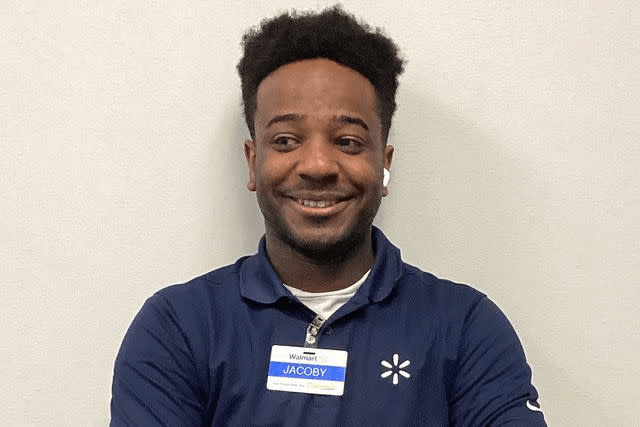
Jacoby Brown, a 24-year-old legally blind Walmart employee in Little Rock, Arkansas, turned to TikTok to share his experiences and advocate for people with disabilities. Born with multiple eye conditions, Jacoby faced employment challenges due to discrimination. After joining Walmart in 2023, he began posting videos under the handle “theblindguy_,” highlighting workplace experiences and challenges faced by individuals with disabilities. His content gained significant attention, leading to widespread praise and recognition from Walmart’s leadership. Jacoby now plans to pursue a degree in social work to further support and advocate for the disabled community.
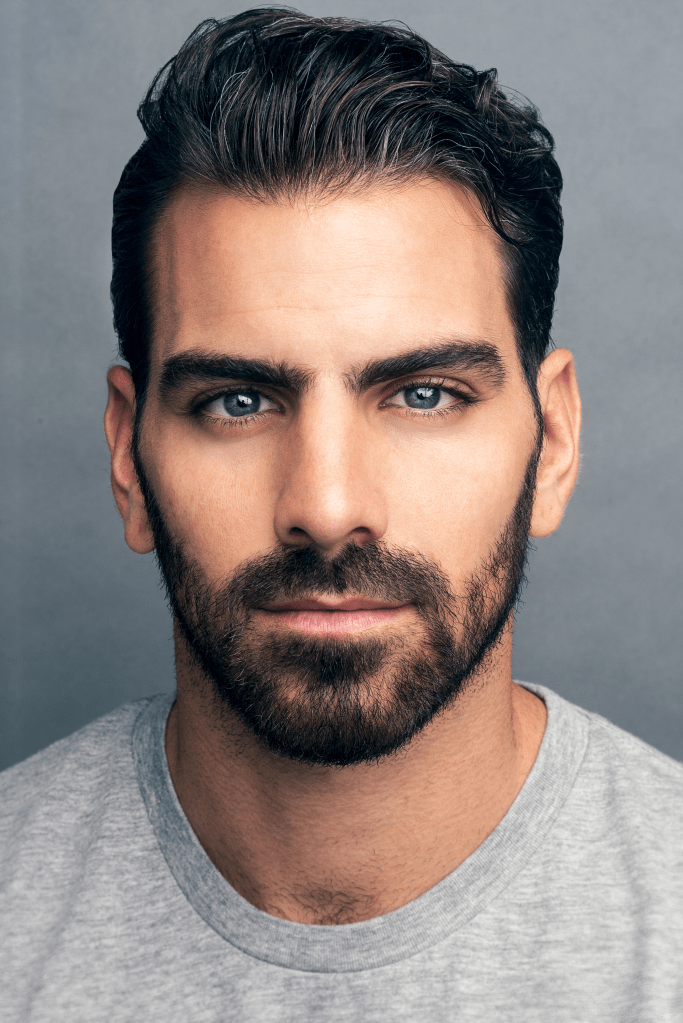
Disability: Deaf Story: Nyle grew up in a deaf family, communicating through American Sign Language. He earned a degree in mathematics and became a winner of America’s Next Top Model and Dancing with the Stars, then launched the Nyle DiMarco Foundation to support bilingual (ASL/English) education for deaf youth. Quote: “Deafness is not a barrier—it’s a culture. And I’m proud to represent it.”




 Goforit